
2026-10-21 ·
Water Stains on Your Ceiling: How to Identify the Source and Prevent Further Damage
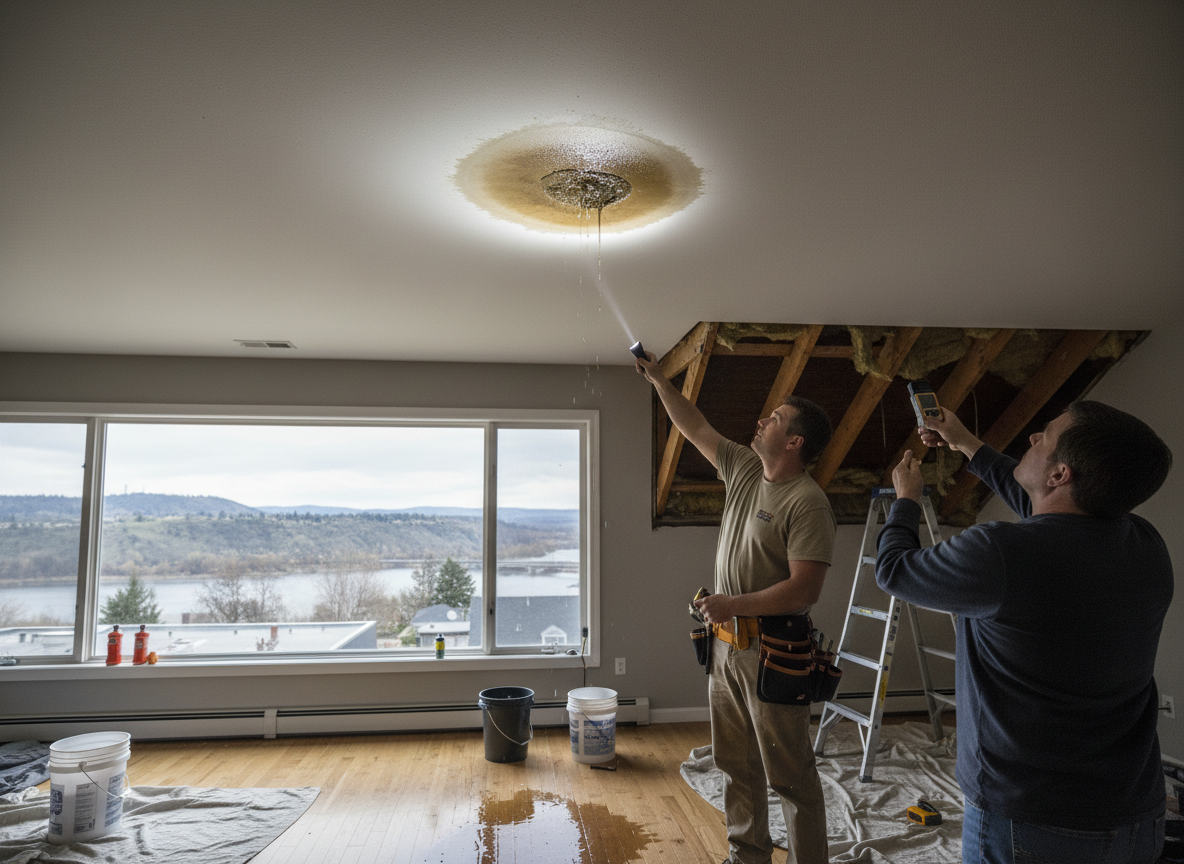
Water stains on your ceiling typically trace back to roof leaks, pipe failures, or attic condensation, and locating the source within the first 24 to 48 hours helps limit mold growth and structural weakening in Spokane homes.
Identifying the Source of Ceiling Water Stains
Start by checking the attic or crawl space above the stain for damp insulation, wet roof decking, or active drips from plumbing lines. In Spokane's variable climate, ice dams during winter or wind-driven rain can push water under shingles on older homes in neighborhoods like South Hill. Trace any discoloration patterns outward from the stain to narrow down whether the issue sits directly overhead or has traveled along joists. Look for soft drywall edges or bubbling paint that signals ongoing moisture. If the home has a flat roof section common in some Spokane Valley properties, inspect flashing around vents and skylights. Document every visible clue with dated photos before any cleanup begins so restoration crews have clear reference points later.
Immediate Safety Steps and Next Actions
Turn off power to affected rooms at the breaker if water has reached electrical outlets or light fixtures. Avoid standing on wet flooring and use a sturdy ladder only after confirming the ceiling structure feels solid. Open windows for ventilation when outdoor humidity stays below 50 percent, which occurs often in Spokane during summer months. Place buckets or tarps beneath active drips to catch water and protect floors. If the stain covers more than a few square feet or shows signs of sagging, restrict access to the room until the source is confirmed and stopped. These first actions reduce shock hazards and keep the problem from spreading into living spaces.
Documentation for Insurance and Planning
Photograph the stain from multiple angles, including close-ups of texture changes and wider shots showing its location relative to windows or fixtures. Note the date, time, and any recent weather events such as heavy rain or snow melt. Keep a written log of odors, temperature readings, and any visible mold spots. Store copies of these records off-site or in cloud storage. This organized approach supports claims with local insurers and gives restoration teams the details needed for accurate scoping. See the guide on how to document property damage before cleanup and repairs for a printable checklist tailored to Spokane properties.
Drying, Contamination Risks, and Contents Protection
Remove wet insulation or drywall sections only after the leak source is fixed to avoid spreading spores. Use fans and dehumidifiers to pull moisture from wood framing and subfloors, aiming to drop indoor humidity below 50 percent within 48 hours. In Spokane homes with older plaster ceilings, hidden pockets of water can feed mold behind the surface. Move furniture, rugs, and stored items away from the area and cover them with plastic sheeting. Check for sewage or gray water intrusion if the stain aligns with bathroom or laundry lines, as these require separate handling under water damage restoration protocols.
Restoration Planning and Professional Help
Once drying is complete, plan repairs that address both the visible ceiling and the underlying cause, such as resealing roof penetrations or replacing sections of pipe. Monitor the area for recurring discoloration over the next several weeks, especially after the next rain event. When the stain spans multiple rooms, involves structural wood, or shows black mold growth, contact specialists for ceiling water damage repair. Situations involving widespread contamination or insurance disputes often benefit from the assessment outlined in water, fire or storm damage when professional restoration may be needed. Local crews familiar with Spokane building styles can inspect attics and recommend targeted fixes that prevent repeat issues.