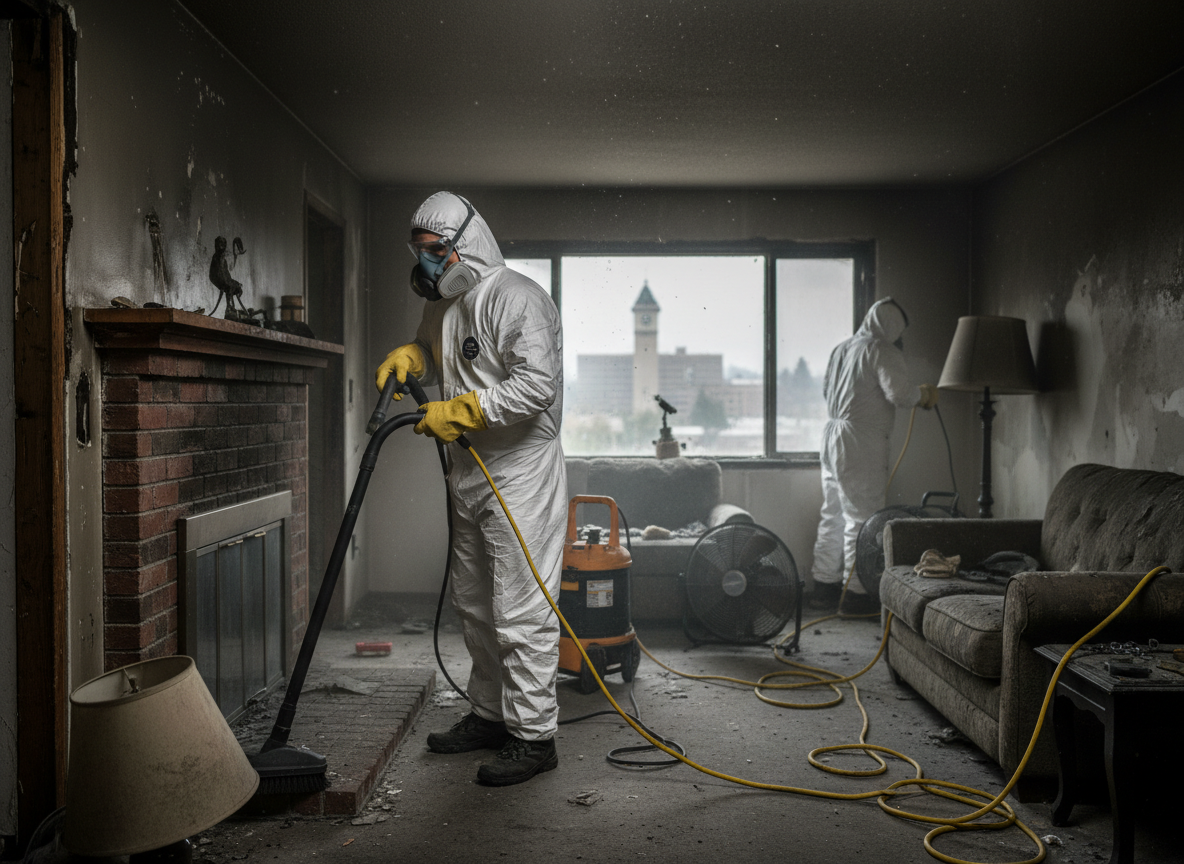
Smoke damage in Spokane homes often stems from kitchen fires, electrical faults, or fireplace malfunctions that allow soot and smoke to travel through HVAC systems and wall cavities. Safety starts with turning off power to affected circuits and using PPE to avoid inhaling particulates that can irritate lungs. Assessment involves inspecting surfaces, attics, and ductwork for acidic soot that can etch metal and discolor fabrics over time.
Cleanup begins with HEPA vacuuming loose particles, followed by specialized chemical sponges and detergents matched to the smoke type. Extraction targets oily residues from synthetic materials common in modern furnishings, while porous items like drywall may require removal if saturation is deep. Drying uses air movers and dehumidifiers to prevent secondary mold growth, especially after WA winter moisture mixes with residues.
Deodorization employs hydroxyl generators or thermal fogging to neutralize odors trapped in insulation and wood framing. Contents handling includes on-site cleaning for durable goods and off-site processing for textiles or electronics when on-site methods risk further damage. Restoration decisions weigh cleaning effectiveness against replacement, with items like carpet padding or unsealed wood often replaced rather than restored.
Repair versus replace hinges on material porosity and smoke penetration depth; sealed surfaces like tile clean more readily than unsealed concrete or drywall. In Spokane's older housing stock, lath-and-plaster walls can hold odors longer than newer drywall, influencing whether full demolition is needed.
Technician insight
In Spokane, the thing that catches most people out with smoke damage cleanup is how older homes with balloon framing let smoke travel up exterior walls and into attics far from the fire origin. Cold WA winters keep indoor air dry, so residues stay powdery longer and hide in insulation until humidity rises. Homeowners often stop at visible walls and miss the ducts, which then re-contaminates cleaned rooms weeks later.
Attic Smoke Migration in South Hill Bungalow
A kitchen stove fire sent smoke upward through open stairwells and into the attic of a 1920s bungalow. Inspection revealed soot coating rafters and insulation two floors away. Crews contained the space, HEPA-vacuumed and treated all surfaces, then removed saturated insulation before deodorizing. The home returned to normal occupancy without recurring odors once the HVAC was also cleaned.
Smoke Damage Cleanup Services We Offer
✓Soot Residue Removal
Targets acidic soot on walls, ceilings, and fixtures to prevent long-term etching and discoloration in Spokane properties.
✓HVAC System Cleaning
Removes smoke particles from ducts and vents to stop redistribution of odors and contaminants throughout the home.
✓Odor Neutralization Treatments
Applies specialized fogging and filtration to break down smoke molecules embedded in fabrics, insulation, and wood.
✓Contents Cleaning and Restoration
Cleans salvageable household items on-site or at a controlled facility to restore usability without cross-contamination.
✓Structural Drying After Smoke Exposure
Uses targeted equipment to dry moisture introduced during firefighting or from Spokane's humid winter air mixing with residues.
✓Selective Demolition Assessment
Evaluates when to remove and replace heavily saturated drywall, insulation, or trim versus attempting full cleaning.
How it works
- 1
Initial Assessment
Inspect all affected rooms, HVAC paths, and hidden cavities to map smoke travel and identify safety hazards.
- 2
Containment and Safety Setup
Isolate work zones with plastic barriers and negative air machines while verifying electrical and respiratory safety.
- 3
Cleaning and Extraction
Apply HEPA vacuums, chemical sponges, and detergents to remove soot from surfaces and extract residues from porous materials.
- 4
Drying, Deodorization, and Contents Handling
Deploy drying equipment, neutralize odors, and clean or remove contents based on material condition.
- 5
Final Restoration Decisions
Compare cleaning results against replacement needs and complete repairs to restore the space.
Pricing
Costs vary by square footage affected, depth of smoke penetration into cavities, and whether HVAC cleaning or contents processing is required.