
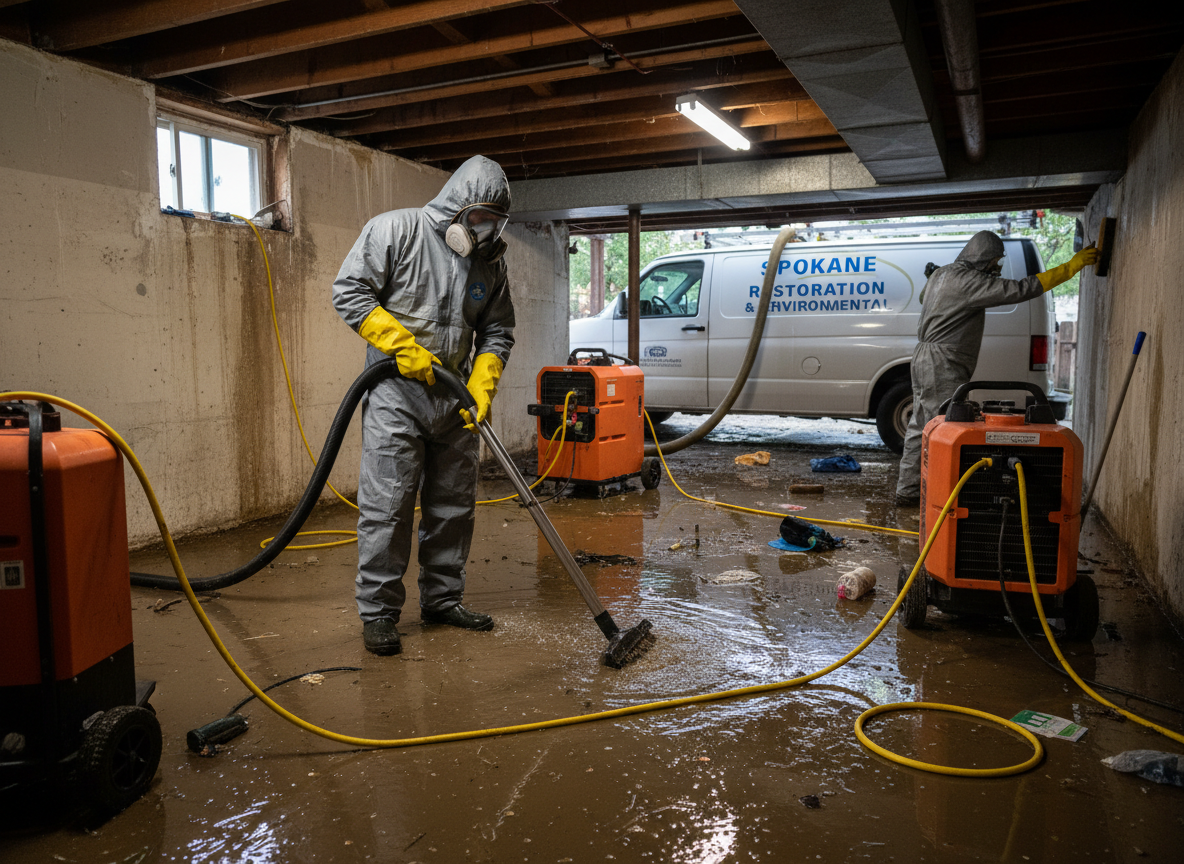
Sewage backups in Spokane often stem from tree roots invading older clay sewer lines, heavy spring rains overwhelming combined storm and sanitary systems, or frozen pipes cracking during winter temperature drops. These events introduce contaminated water that carries bacteria and can affect basements, crawl spaces, and lower-level rooms in neighborhoods with pre-1970 construction.
Safety Considerations
Technicians begin by isolating the affected area and using PPE to limit exposure to pathogens. Standing water is tested for contaminants before any entry, and ventilation is established to reduce airborne risks in enclosed Spokane basements.
Assessment and Extraction
A moisture meter and infrared camera map the full extent of saturation, including hidden areas behind baseboards or under flooring. Extraction uses truck-mounted pumps to remove bulk liquid, followed by removal of saturated carpet pads, vinyl flooring, and drywall up to the water line.
Drying, Deodorization, and Contents
Industrial air movers and dehumidifiers run until wood framing and subfloors reach acceptable moisture levels, typically checked daily. Activated charcoal and ozone equipment address lingering odors while salvageable contents are inventoried, cleaned off-site when possible, and returned.
Restoration Decisions and Repair-vs-Replace
When structural wood remains sound after drying, targeted repairs restore the space. Severely contaminated porous materials such as insulation or particleboard are replaced to prevent long-term mold growth, a frequent outcome in Spokane's variable climate.
Technician insight
In Spokane, the thing that catches most people out with sewage cleanup is how quickly water travels under the slab or into the crawl space in homes built before the 1980s, especially on the South Hill where clay soils hold moisture longer. Homeowners often stop at visible water and miss the saturated insulation behind the drywall, which then leads to hidden mold weeks later.
South Hill Basement Backup
A homeowner discovered several inches of sewage in a finished basement after a heavy spring rain. Assessment showed water had wicked into carpet pad and lower drywall plus traveled under the slab edge. Extraction removed the liquid, affected materials were removed, and drying equipment ran for four days until readings normalized. The space was restored with new flooring and base trim.
Sewage Cleanup Services We Offer
✓Basement Sewage Extraction
Removes standing contaminated water from lower levels using high-volume pumps to limit further absorption into concrete and framing.
✓Contaminated Drywall Removal
Cuts and disposes of water-damaged drywall and insulation up to the saturation line to eliminate hidden bacterial growth.
✓Sewage Odor Elimination
Applies targeted deodorizing agents and air scrubbing to neutralize smells that persist after water removal in older Spokane homes.
✓Crawl Space Sewage Cleanup
Addresses backups that reach under-floor areas common in Spokane's split-level and ranch-style properties, including vapor barrier replacement.
✓Contents Cleaning and Storage
Cleans, documents, and stores salvageable household items off-site during the drying phase to protect them from further contamination.
How it works
- 1
Initial Assessment
Technicians inspect the source, test water for contaminants, and document affected materials with photos and moisture readings.
- 2
Water Extraction
Bulk liquid is removed with portable and truck-mounted equipment, followed by removal of unsalvageable porous items.
- 3
Drying and Monitoring
Air movers and dehumidifiers run while daily moisture checks confirm progress on framing and subfloors.
- 4
Deodorization and Restoration
Odor treatment is applied, then repairs or replacements are completed to return the space to pre-loss condition.
Pricing
Costs vary with the square footage involved, depth of contamination into flooring or walls, and whether contents require off-site cleaning.