
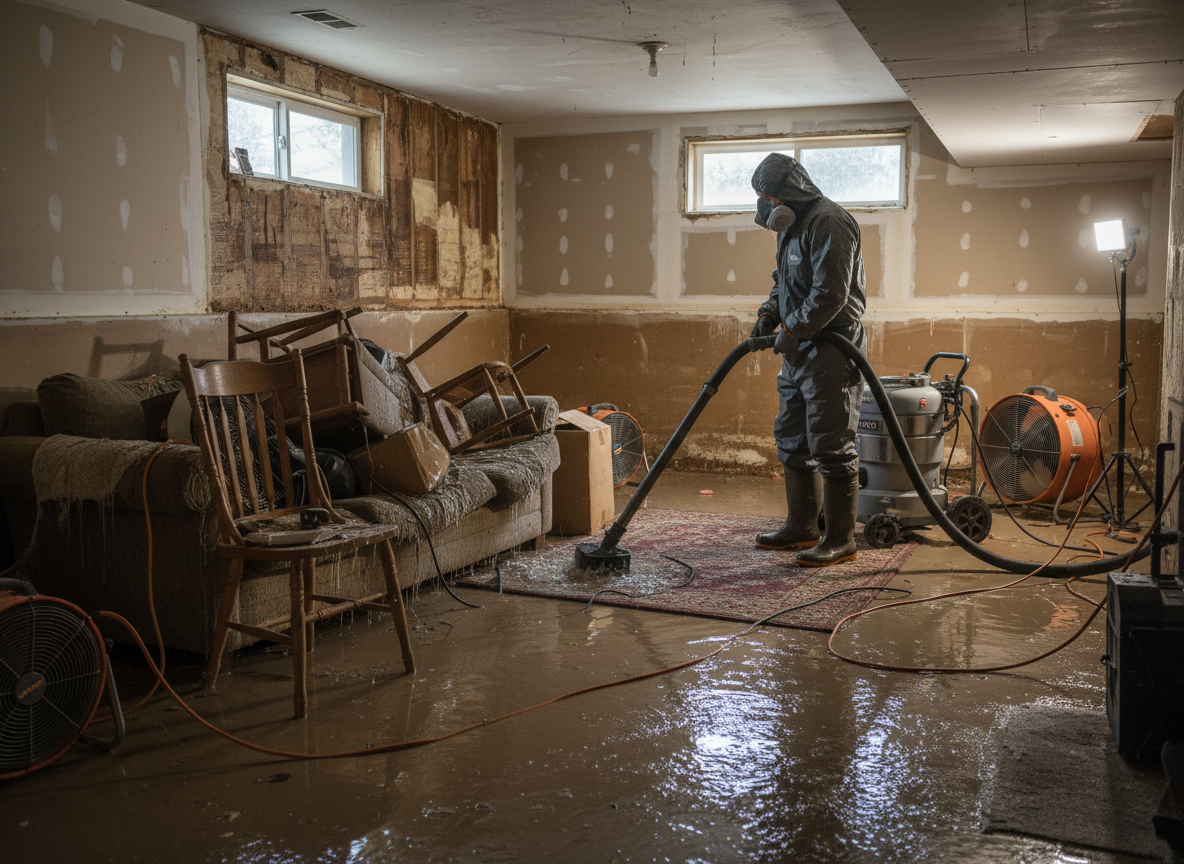
Flooding in Spokane often stems from Spokane River overflow during spring runoff, heavy winter snowmelt on sloped lots, or older plumbing failures in pre-1960 homes. Safety starts with shutting off power and avoiding contact with potentially contaminated water from streets or basements.
Assessment includes checking hidden pockets behind lath-and-plaster walls and under hardwood floors common in Spokane's older neighborhoods. Extraction uses submersible pumps and wands to pull standing water before it migrates into crawl spaces or neighboring units.
Drying follows with commercial air movers and dehumidifiers sized for Spokane's cold, dry winters that can slow evaporation. Contents handling separates salvageable items for off-site cleaning while documenting everything for insurance.
Restoration decisions weigh repair versus replace based on material saturation and local code requirements for older electrical systems. Odor removal uses hydroxyl generators rather than ozone when pets or sensitive occupants are present.
Common Causes in Spokane
Spring snowmelt combined with aging downspouts on South Hill and Browne's Addition homes frequently sends water into basements. Burst water heaters in unheated garages during January cold snaps also trigger sudden flooding.
Repair-vs-Replace Considerations
Saturated subfloors in 1940s Spokane homes are often replaced rather than dried when particleboard has delaminated. Plaster walls can sometimes be saved with targeted drying, but vinyl flooring installed over concrete usually requires full removal.
Technician insight
In Spokane, the thing that catches most people out with Flood Damage Cleanup is how quickly snowmelt on the South Hill's sloped lots pushes water behind plaster walls in 1920s–1940s homes. Homeowners often stop at visible puddles and miss the moisture trapped under original hardwood, which then freezes and expands again in January.
South Hill Basement After Spring Runoff
Water entered a 1938 bungalow basement after heavy snowmelt overwhelmed the downspouts. We found saturated insulation and floor joists extending three feet up the walls. Extraction and focused drying prevented mold while preserving the original subfloor; only the lower drywall needed replacement.
Flood Damage Cleanup Services We Offer
✓Standing Water Extraction
Removes pooled water from basements and crawl spaces before it soaks into Spokane's older foundation materials and spreads to adjacent rooms.
✓Structural Drying
Deploys equipment sized for cold WA winters to pull moisture from walls, floors, and framing without warping original hardwood common in local homes.
✓Contents Handling and Cleaning
Moves, cleans, and stores salvageable furniture and belongings while documenting items that cannot be restored due to flood contamination.
✓Odor Removal and Deodorization
Eliminates musty smells left by floodwater using methods safe for occupied Spokane residences rather than masking odors.
✓Flooring and Underlayment Removal
Safely lifts saturated carpet, pad, and laminate in older Spokane properties where hidden moisture can lead to hidden mold growth.
✓Sewage-Contaminated Water Cleanup
Manages Category 3 water from street flooding or backed-up lines that frequently affect lower-lying Spokane neighborhoods near the river.
How it works
- 1
Safety and Site Assessment
Power is isolated and visible plus hidden moisture is mapped with meters before any cleanup begins.
- 2
Water Extraction
Standing water is removed using pumps and vacuums to stop further migration into walls and floors.
- 3
Drying and Monitoring
Equipment runs with daily moisture checks until materials return to normal levels for the Spokane climate.
- 4
Contents and Restoration Decisions
Salvageable items are cleaned or moved while decisions are made on repair versus replacement of structural elements.
Pricing
Cost depends on square footage affected, depth of water, whether contents require separate handling, and how many days of drying equipment are needed in Spokane's variable winter conditions.