
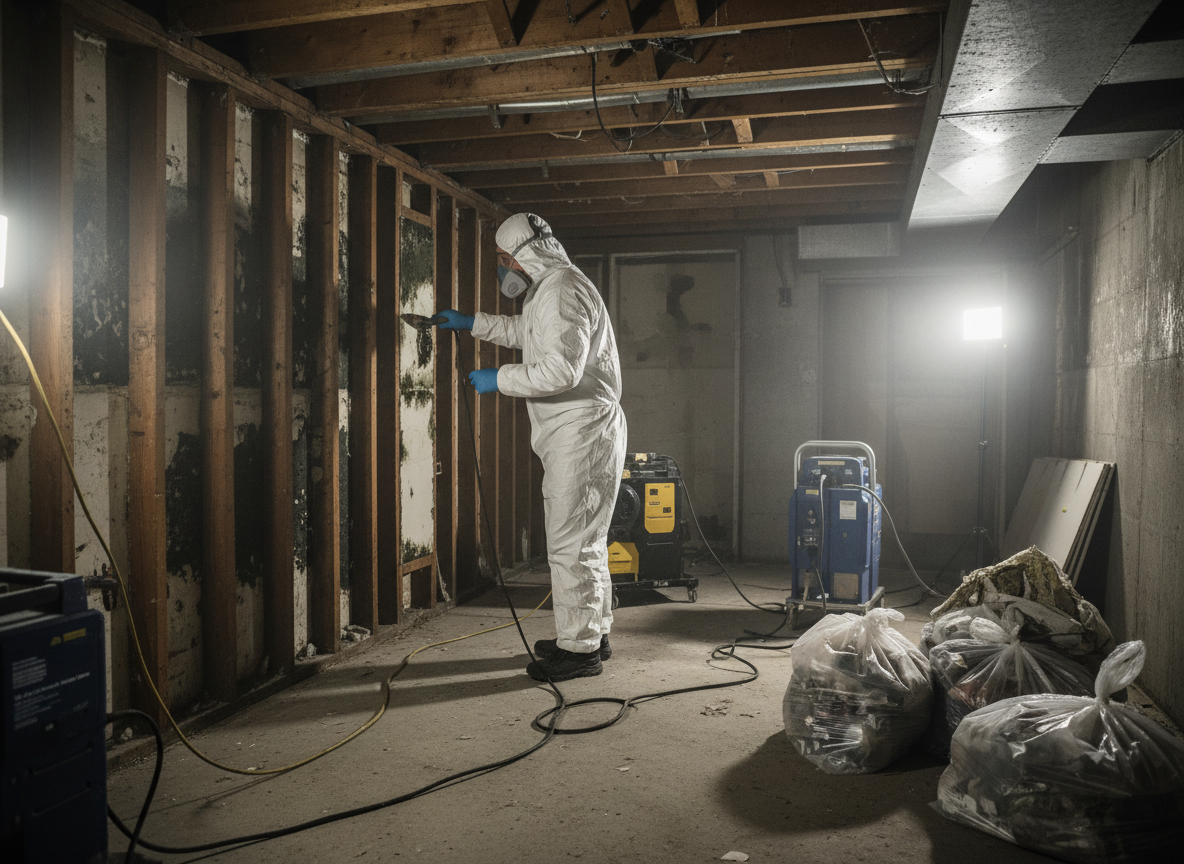
Mold appears in Spokane homes after roof leaks, plumbing failures, or snow melt entering foundations. Older houses on the South Hill and in Browne's Addition often have poor ventilation that lets moisture linger behind walls and under floors. Safety starts with containing the area so spores do not spread to living spaces. Technicians wear PPE and use negative air machines during every job.
Assessment includes moisture meters, thermal imaging, and air sampling to locate the full extent of growth. Cleanup follows IICRC standards with HEPA vacuuming and antimicrobial application on non-porous surfaces. Extraction removes saturated drywall, insulation, and carpet padding that cannot be saved. Drying uses commercial air movers and dehumidifiers until wood moisture content returns to normal levels. Deodorization with hydroxyl generators eliminates musty odors once the source is gone.
Contents handling means bagging and cleaning salvageable items off-site when possible. Heavily contaminated furniture is documented for replacement decisions. Restoration decisions weigh whether subflooring or framing can be sanded and sealed versus full replacement. Repair-versus-replace calls are made after the structure is fully dry and tested.
Common Causes in Spokane Homes
Freeze-thaw cycles push water through older mortar and siding. Attics develop mold when ice dams form on roofs during long winters. Crawl spaces stay damp because many homes lack proper vapor barriers under the soil.
Repair vs Replace Considerations
Framing that shows only surface staining can usually be cleaned and sealed. Joists with deep rot or structural weakening require sistering or replacement. The choice depends on moisture readings taken after drying, not on appearance alone.
Technician insight
In Spokane the thing that catches most people out with Mold Remediation is moisture trapped under older hardwood floors after ice dams or snow melt. Homeowners see ceiling spots but miss how the same water travels along subfloors and feeds mold two rooms away.
Hidden Crawl Space Growth After Roof Leak
Water from a winter roof leak reached the crawl space of a 1940s Spokane home. Inspection found active mold on joists and soil that had stayed damp for months. Crews removed saturated insulation, dried the soil, installed a vapor barrier, and sealed the joists. The musty smell disappeared and moisture readings stayed low through the next freeze-thaw cycle.
Mold Remediation Services We Offer
✓Attic Mold Remediation
Removes growth above living spaces and improves ventilation so winter condensation does not return.
✓Crawl Space Mold Treatment
Treats soil and joists in damp under-floor areas common in Spokane's older neighborhoods.
✓Basement Mold Extraction
Removes contaminated drywall and insulation after foundation leaks or sump pump failures.
✓Bathroom Mold Cleanup
Targets tile, drywall, and cabinetry around showers where constant humidity feeds hidden colonies.
✓HVAC Mold Remediation
Cleans coils, ducts, and plenums so spores stop circulating through the entire house.
✓Wall Cavity Mold Removal
Opens and treats cavities behind baseboards and outlets after undetected plumbing leaks.
How it works
- 1
Moisture Mapping And Containment
Technicians locate every wet area with meters and set up physical barriers plus negative air to protect the rest of the home.
- 2
Removal Of Affected Materials
Saturated drywall, insulation, and trim are cut out and bagged for disposal while keeping dust contained.
- 3
Drying And Dehumidification
High-velocity air movers and commercial dehumidifiers run until wood and drywall reach safe moisture levels.
- 4
Final Cleaning And Clearance Testing
HEPA vacuuming and surface treatments finish the job; independent air samples confirm the space meets post-remediation standards.
Pricing
Cost depends on square footage affected, whether hidden cavities must be opened, and how much contents require separate cleaning or disposal.