
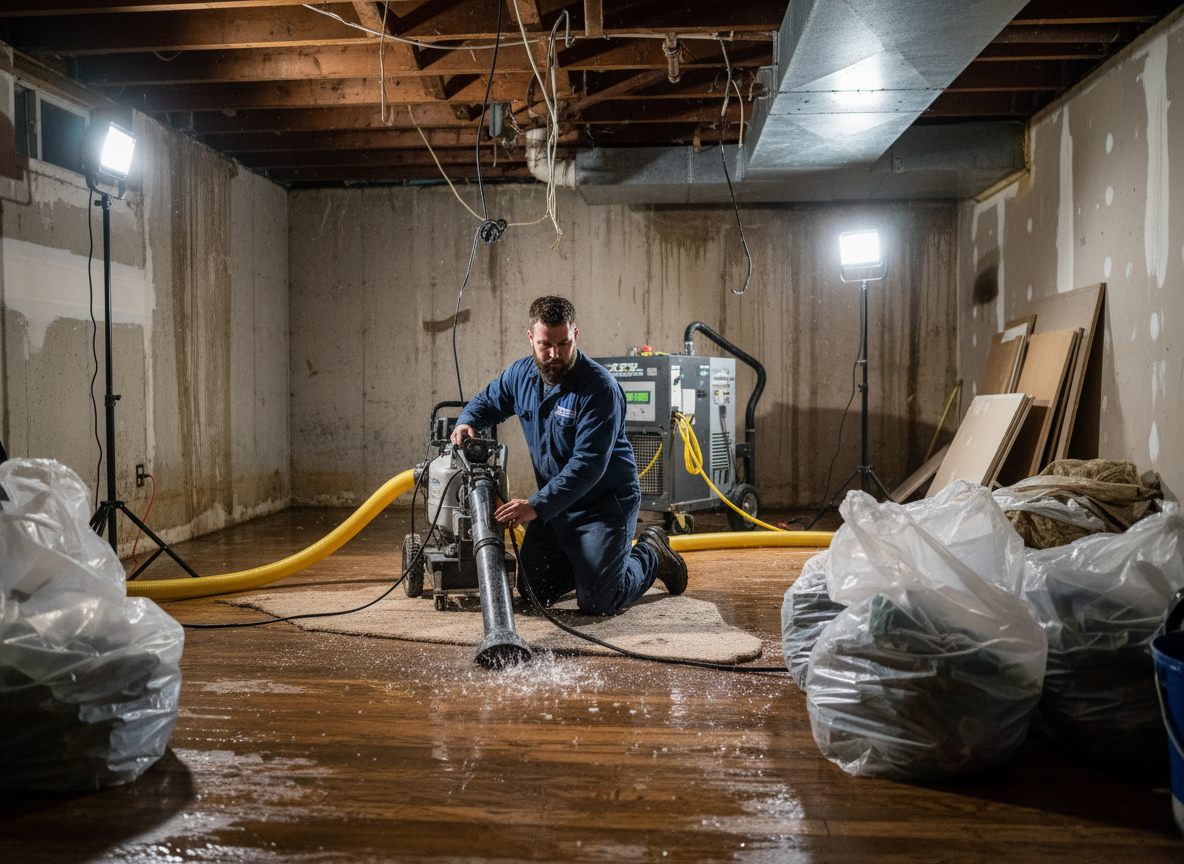
Water damage in Spokane homes often stems from burst pipes during winter freezes, roof leaks from heavy snow loads, appliance failures, or groundwater seepage in older foundations. Safety considerations include shutting off power to affected areas, avoiding contact with potentially contaminated water, and using proper ventilation before entry. Assessment starts with moisture mapping and hidden cavity checks to determine the full extent before any cleanup begins.
Cleanup and extraction focus on removing standing water with specialized pumps and vacuums, followed by removal of saturated materials that cannot be saved. Drying and dehumidification use industrial air movers and dehumidifiers to bring moisture levels back to normal, while deodorization targets odors from mold or sewage. Contents handling involves documenting, packing out, and cleaning salvageable items separately from the structure.
Restoration decisions weigh whether to repair damaged drywall, flooring, or framing in place or replace sections entirely based on material condition and hidden damage found during drying. Repair often wins for localized issues in load-bearing elements, while full replacement becomes necessary when microbial growth has set in or structural integrity is compromised.
Common Causes in Spokane
Winter pipe bursts in crawlspaces and attics, ice dam roof leaks, and aging galvanized plumbing in pre-1970 homes drive most calls. Groundwater intrusion near the Spokane River corridor also appears after prolonged rain.
Repair vs Replace Considerations
Technicians inspect for delamination in subfloors and check joist integrity before recommending repair. Replacement is chosen when water has reached insulation or when electrical components show corrosion that repair cannot reliably address.
Technician insight
In Spokane, the thing that catches most people out with water damage restoration is how quickly a small attic pipe leak soaks insulation and then drops into finished ceilings during a hard freeze. Older homes here often have limited attic access, so the water travels farther than homeowners expect before anyone notices. Checking the crawlspace and attic at the same time as the living areas changes the whole scope of the job.
Frozen Pipe in Browne's Addition Home
A kitchen supply line froze and burst overnight, sending water under the hardwood into the basement below. Assessment found saturated subfloor joists and insulation that had wicked moisture across two rooms. Extraction and drying equipment ran for four days, after which only the damaged section of flooring and one wall needed replacement instead of the entire kitchen.
Water Damage Restoration Services We Offer
✓Burst Pipe Water Extraction
Removes standing water from pipe failures and protects surrounding surfaces from further saturation in Spokane homes.
✓Roof Leak Drying
Extracts moisture from ceiling cavities and insulation after ice dam or storm damage to prevent hidden mold.
✓Basement Seepage Cleanup
Handles groundwater entry through foundation walls common in Spokane's older neighborhoods and restores dry conditions.
✓Appliance Leak Remediation
Targets water from washing machines, water heaters, and dishwashers while salvaging nearby cabinetry and flooring.
✓Contents Drying and Cleaning
Packs out, dries, and restores furniture, documents, and personal items affected by water intrusion.
✓Structural Drying After Flooding
Uses targeted airflow and dehumidification on walls and floors following heavy rain or snowmelt events.
How it works
- 1
Initial Assessment
Technicians inspect all affected rooms, use moisture meters on walls and floors, and identify the water source.
- 2
Water Extraction
Standing water is removed with pumps and wands, then saturated debris is hauled away.
- 3
Drying and Deodorization
Air movers, dehumidifiers, and odor-neutralizing equipment run until moisture readings normalize.
- 4
Restoration and Repair
Damaged materials are replaced or repaired, and the space is returned to pre-loss condition.
Pricing
Costs depend on the volume of water, number of affected rooms, depth of saturation into subfloors or insulation, and whether contents require separate handling.