
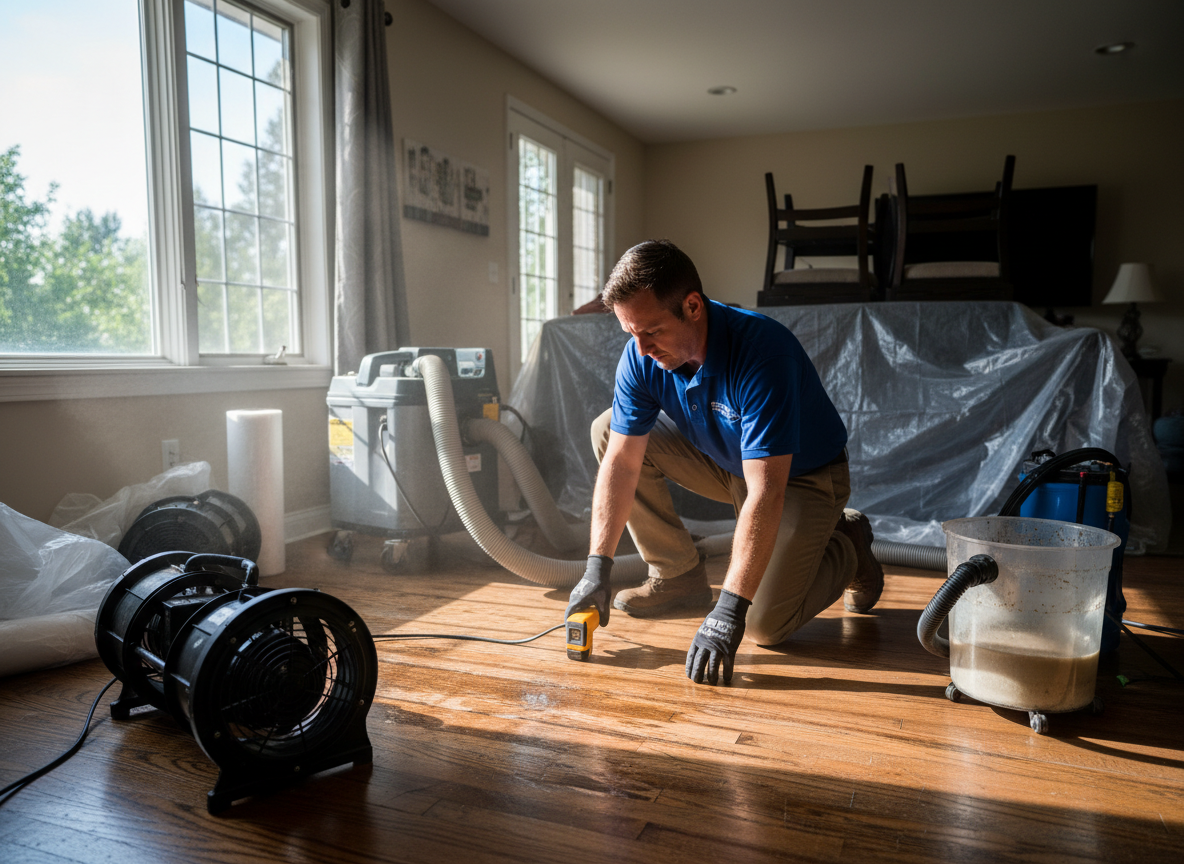
Water intrusion in Spokane floors often stems from burst pipes in crawlspaces, overflowing appliances, roof leaks during heavy winter storms, or groundwater seepage after spring thaw. These events soak through hardwood, laminate, carpet, and tile, reaching subfloors and joists where moisture lingers unseen.
Safety begins with shutting off power to affected circuits and wearing PPE to avoid electrical hazards or mold spores stirred during removal. Technicians test for structural weakness before walking on compromised areas.
Assessment And Extraction
Assessment uses moisture meters and thermal imaging to map saturation without guessing. Extraction removes standing water via pumps and wands, followed by removal of saturated carpet pads or swollen laminate sections that trap moisture against the subfloor.
Drying follows with industrial air movers and dehumidifiers positioned to pull moisture from both above and below the floor. Deodorization treats musty odors left by contaminated water using HEPA filtration and antimicrobial agents where needed.
Contents handling includes moving furniture and belongings out of the zone, documenting items for insurance, and cleaning salvageable pieces off-site if secondary damage risk exists.
Restoration Decisions And Repair Vs Replace
Restoration decisions weigh whether the flooring can be dried and refinished or must be replaced. Hardwood may recover if caught early, while particleboard subfloors usually require full removal once saturated. Repair versus replace hinges on visible cupping, delamination, or persistent moisture readings above 15 percent.
Technician insight
In Spokane, the thing that catches most people out with Water Damaged Floor Restoration is how freeze-thaw cycles push groundwater under 1950s-1970s slab homes on the South Hill, so what looks like a small kitchen leak often means pulling baseboards to dry the perimeter before mold starts in the wall cavities.
Washing Machine Leak Into Laminate
A homeowner noticed water seeping from under the laundry room laminate after a hose split. Inspection showed saturation had reached the particleboard underlayment across eight feet of flooring. Extraction and targeted drying were performed, followed by replacement of the damaged laminate section to match the existing pattern.
Water Damaged Floor Restoration Services We Offer
✓Hardwood Floor Drying
Removes trapped moisture from solid wood planks before cupping sets in, preserving original Spokane-era flooring where possible.
✓Subfloor Moisture Mapping
Uses meters and probes to locate hidden saturation in plywood or OSB layers common under older WA homes.
✓Carpet Pad and Underlayment Removal
Extracts waterlogged padding that holds odor and mold, allowing the carpet to be reinstalled after proper drying.
✓Laminate Flooring Replacement
Replaces swollen or separated laminate planks that cannot be salvaged once water reaches the core.
✓Tile Grout and Underlayment Drying
Pulls moisture from beneath ceramic or porcelain tile without full demolition when the underlayment remains intact.
✓Contents Relocation and Cleaning
Moves and cleans furniture and household items away from the wet zone to prevent secondary damage during floor work.
How it works
- 1
Initial Assessment
Technicians inspect the source, test moisture levels across multiple layers, and document affected square footage.
- 2
Water Extraction
Standing water is pumped or vacuumed out, followed by removal of saturated materials that block drying.
- 3
Drying And Monitoring
Air movers and dehumidifiers run until readings return to normal, with daily checks to track progress.
- 4
Restoration Or Replacement
Flooring is either refinished or replaced based on material condition and extent of damage.
Pricing
Pricing depends on square footage affected, flooring type, depth of saturation, and whether subfloor work is required.