
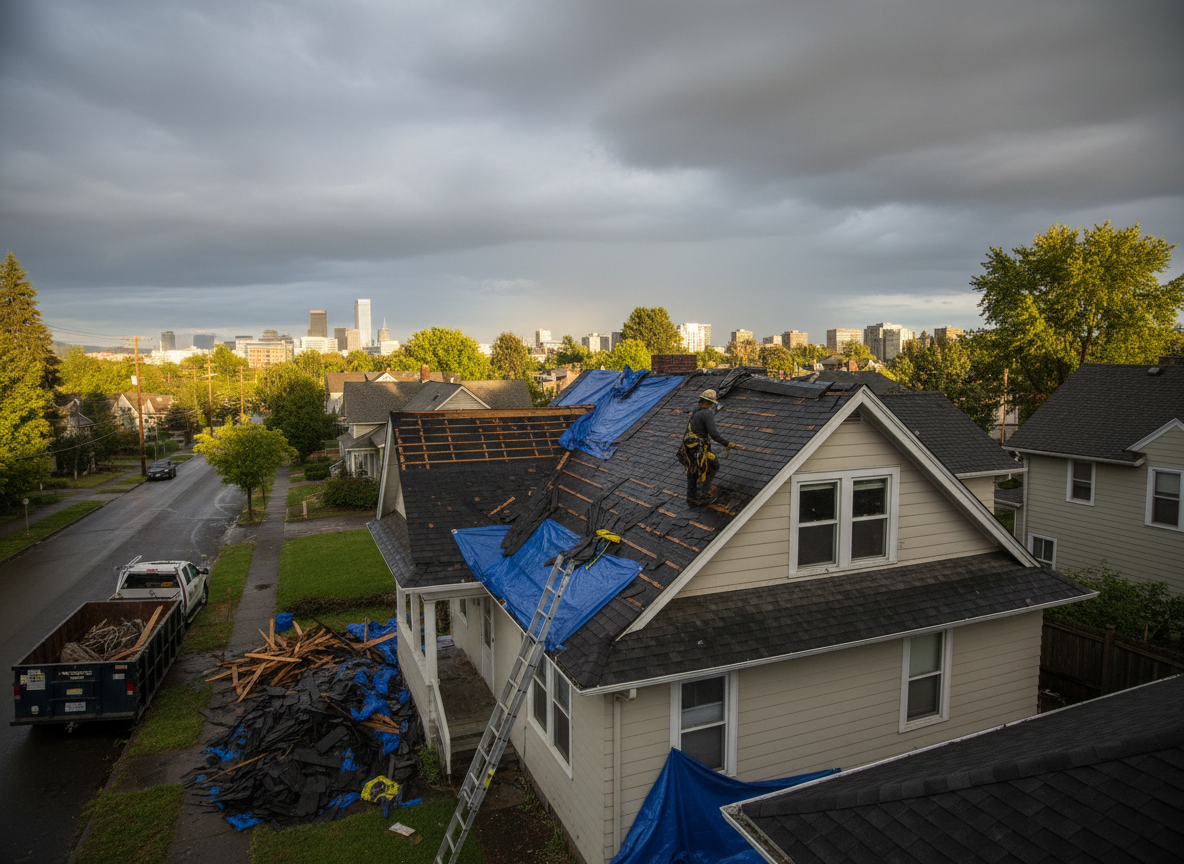
Spokane roofs face repeated stress from winter wind storms that lift shingles and from spring hail that fractures granules, allowing water to reach the underlayment. Older neighborhoods with homes built in the 1960s through 1980s often show brittle asphalt shingles that fail faster once the seal is broken. Safety starts with checking for structural sagging and downed power lines before any crew steps on the roof. Assessment includes walking the surface, inspecting attic spaces for wet insulation, and documenting every damaged section for insurance purposes.
Cleanup removes loose debris and detached shingles while extraction of standing water in attics or soffits prevents mold. Drying follows with commercial air movers directed at wet decking and insulation. Contents such as stored boxes in the attic are inventoried and moved to a dry area when possible. Restoration decisions weigh whether individual shingles can be replaced or if an entire slope must be redone based on age and remaining life of the existing roof.
Repair versus replace hinges on how many squares are affected and whether the underlayment remains intact. Matching new shingles to faded original colors is a frequent challenge on Spokane homes that have not been re-roofed in decades.
Technician insight
In Spokane, the thing that catches most people out with Roof Storm Damage Repair is how quickly a January wind storm followed by a February thaw drives meltwater under lifted shingles on pre-1980 homes with single-layer roofs; once that happens the insulation soaks fast and homeowners often miss it until ceiling stains appear weeks later.
Wind-Driven Leak on North Spokane Bungalow
High winds during a February storm lifted several rows of shingles on a 1972 bungalow. We found wet insulation and minor deck staining in the attic. Crew removed the damaged insulation, dried the decking, replaced the lifted shingles with matching stock, and restored the attic space.
Roof Storm Damage Repair Services We Offer
✓Hail Impact Assessment
Documents granule loss and fracture patterns across the roof surface so homeowners receive accurate scope for insurance claims.
✓Wind Uplift Shingle Repair
Re-secures or replaces lifted shingles and checks flashing around vents and chimneys to stop wind-driven rain entry.
✓Attic Insulation Drying and Replacement
Removes soaked insulation, dries the decking, and installs new material to restore thermal performance after storm leaks.
✓Gutter and Downspout Restoration
Straightens or replaces dented gutters and clears debris so melt water continues to flow away from the foundation.
✓Soffit and Fascia Storm Repair
Replaces cracked or detached soffit panels and fascia boards damaged by falling branches during high winds.
✓Emergency Roof Tarping
Installs temporary reinforced tarps over exposed decking to protect interiors until permanent repairs can begin.
How it works
- 1
Safety and Site Securing
Crew evaluates roof access, checks for power hazards, and installs tarps or barriers before any interior work.
- 2
Detailed Assessment
Technicians inspect shingles, underlayment, attic insulation, and flashing to map all affected areas.
- 3
Debris Removal and Water Extraction
Loose shingles and branches are cleared, then any standing water in attics or wall cavities is extracted.
- 4
Drying, Repair, and Final Walkthrough
Wet materials are dried or replaced, matching shingles are installed, and the homeowner reviews the completed work.
Pricing
Cost varies with roof pitch, number of damaged squares, accessibility on Spokane's hilly lots, and whether insulation replacement is required.