Odor damage in Spokane properties often stems from fire residue, sewage backups, standing water in basements, or pet accidents that penetrate subfloors and wall cavities. Cold winters and older housing stock in areas like South Hill allow these smells to linger because moisture and temperature swings trap particles in plaster and wood.
Common Causes and Safety Considerations
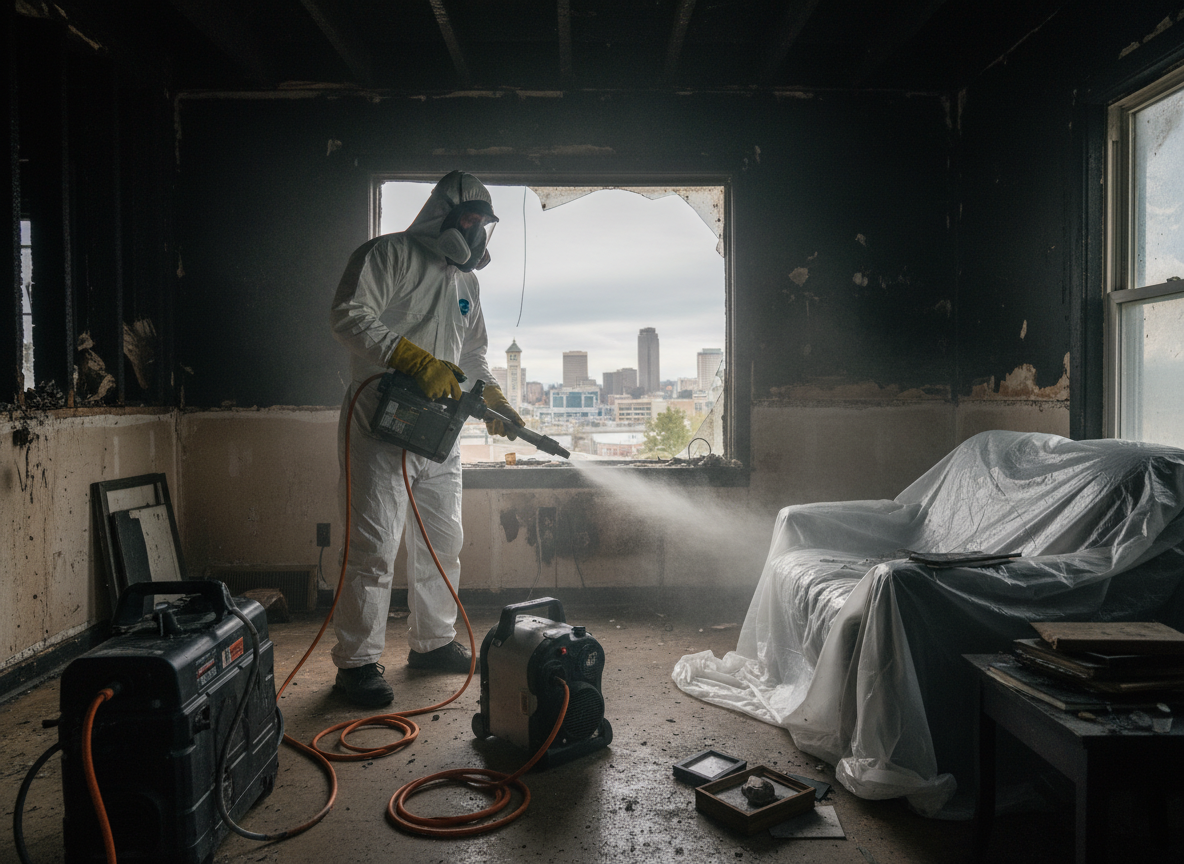
Frequent triggers include smoke from kitchen fires, sewer line failures during heavy spring rains, and mold growth after roof leaks. Technicians first secure the space with ventilation and PPE to avoid exposure to bacteria, VOCs or particulates before any cleaning begins.
Assessment, Extraction and Deodorization
Assessment uses moisture meters and olfactory inspection to locate hidden sources. Liquid extraction removes contaminated water or waste, followed by targeted removal of affected insulation or carpet padding. Air movers and hydroxyl generators then neutralize remaining molecules rather than masking them.
Contents Handling and Repair-vs-Replace Decisions
Porous items like upholstered furniture or books are evaluated for salvage; non-porous surfaces receive surface cleaning. Replacement occurs only when odor has bonded permanently to materials, avoiding blanket disposal of contents that can be restored.
Technician insight
In Spokane, the thing that catches most people out with Odor Damage Cleanup is how older brick and plaster homes in neighborhoods like Browne's Addition trap smells in wall cavities during our long, damp winters, so surface cleaning alone rarely solves it.
Basement Sewage Odor After Spring Thaw
A South Hill homeowner noticed persistent sewage smell returning each spring. Inspection found waste residue trapped under 1960s oak flooring after repeated minor backups. Crews removed the affected subfloor sections, extracted residue, and ran hydroxyl treatment for three days. The odor did not return after reinstallation and final drying.
Odor Damage Cleanup Services We Offer
✓Smoke Odor Removal
Eliminates embedded smoke particles from walls, ducts and textiles after fires without relying on temporary masking agents.
✓Sewage Odor Extraction
Removes waste-related smells and bacteria from affected flooring and substructures following backups or floods.
✓Mold Odor Remediation
Targets musty smells caused by hidden mold colonies in crawl spaces and attics common in Spokane's older homes.
✓Pet Urine Odor Cleanup
Breaks down uric acid crystals in subfloors and baseboards to stop recurring pet smells in residential settings.
✓Cooking Odor Deodorization
Neutralizes grease and food residue odors that have migrated into HVAC systems and cabinetry over time.
✓Tobacco Smoke Residue Removal
Cleans nicotine films from ceilings, windows and fabrics that accumulate in long-term rental or multi-unit properties.
How it works
- 1
Source Identification
Inspect the property to locate the origin of the odor using meters and visual checks of walls, floors and HVAC.
- 2
Containment and Safety Setup
Isolate the affected zone and establish ventilation to protect occupants and prevent spread during work.
- 3
Extraction and Material Removal
Remove standing liquids or saturated materials, then clean surfaces to eliminate the odor reservoir.
- 4
Deodorization and Drying
Apply air treatment equipment and drying systems until readings confirm the smell and moisture are gone.
- 5
Contents Evaluation and Final Verification
Assess and treat salvageable items, then confirm the space meets odor-free standards before reoccupancy.
Pricing
Pricing depends on the type and severity of the odor source, square footage involved, and whether contents or structural materials require special handling.