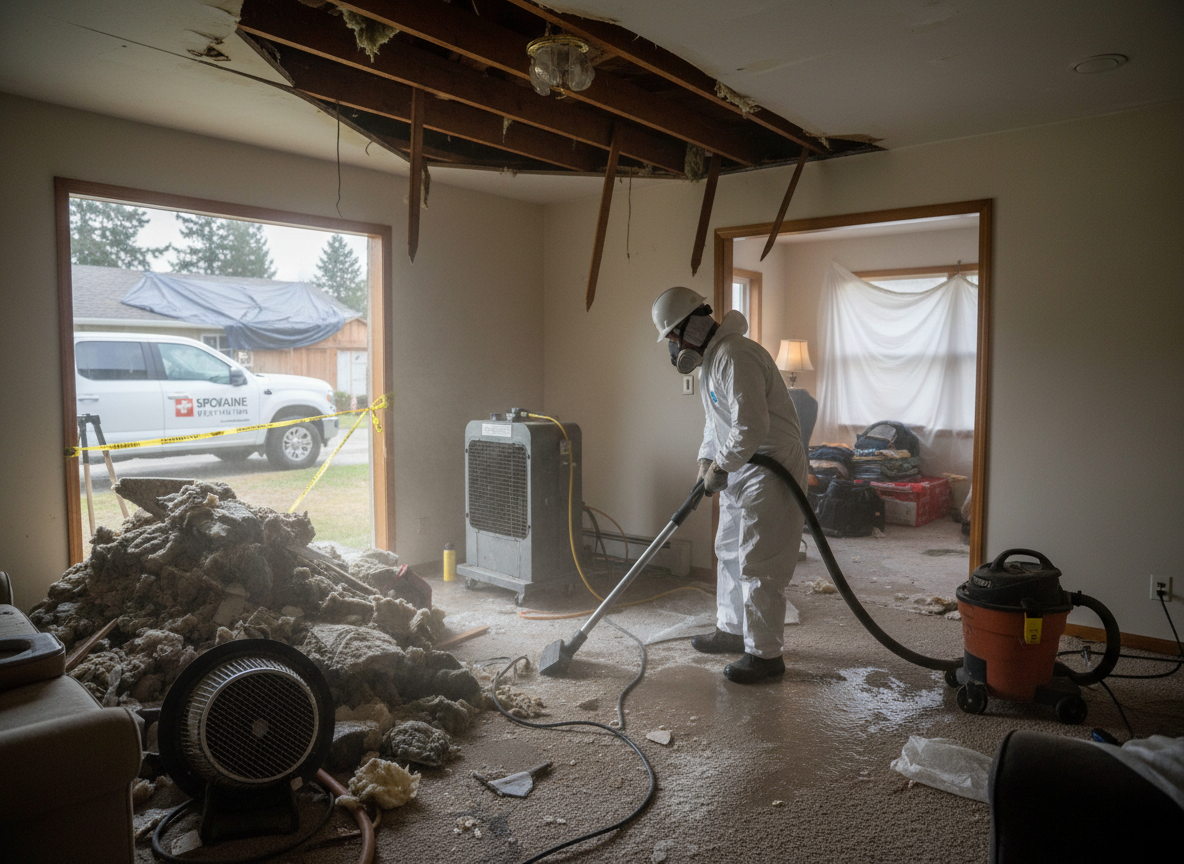
Common causes of property damage in Spokane include burst pipes during cold snaps, roof leaks from heavy snow loads, and sewage backups in older neighborhoods with aging sewer lines. Safety considerations start with shutting off utilities and using PPE to avoid electrical hazards or airborne contaminants before any cleanup begins. Assessment involves moisture meters and visual inspection of hidden areas like crawl spaces common in Spokane basements.
Cleanup and extraction focus on removing standing water or debris first, followed by targeted drying with industrial equipment to prevent mold growth in the region's damp winters. Deodorization addresses smoke or sewage odors using air scrubbers suited to enclosed Spokane homes. Contents handling includes moving salvageable items to a dry area for cleaning rather than discarding them outright.
Restoration decisions weigh the cost of repair against replacement, especially for drywall or flooring in pre-1970s Spokane houses where water can travel far behind walls. Repair is often chosen when structural framing remains sound after proper drying.
Common Causes in Spokane
Freezing temperatures in winter frequently lead to pipe bursts in uninsulated older homes near the South Hill. Heavy rainfall combined with poor drainage on sloped lots can push water into foundations.
Safety and Assessment Steps
Technicians first verify power and gas shutoffs, then map affected zones with meters to locate moisture that standard visual checks miss in Spokane's multi-level homes.
Technician insight
In Spokane, the thing that catches most people out with Emergency Property Damage Cleanup is how far water travels behind plaster walls in pre-war homes on the lower South Hill. Homeowners often stop at visible puddles and miss saturation in the horsehair plaster, which then feeds mold once temperatures rise again. Checking the attic and exterior grading around the foundation usually changes the scope of the job.
Burst Pipe in Browne's Addition Home
A kitchen supply line froze and split overnight, sending water across the main floor and into the basement. Inspection showed saturation in the subfloor joists and lower drywall that standard fans would not reach. Extraction and drying equipment were placed for several days, after which the homeowner opted to repair the drywall rather than replace the entire floor system.
Emergency Property Damage Cleanup Services We Offer
✓Water Damage Extraction
Removes standing water from basements and crawl spaces common in Spokane homes to limit further spread into framing and insulation.
✓Fire and Soot Cleanup
Clears residue from surfaces after small fires while protecting remaining contents from additional smoke staining in enclosed rooms.
✓Sewage Backup Removal
Extracts contaminated water and disinfects affected areas in older Spokane properties where aging sewer lines often fail.
✓Structural Drying Services
Uses targeted airflow and dehumidification to dry wall cavities and subfloors before mold can establish in WA's cool climate.
✓Contents Cleaning and Handling
Moves, cleans, and stores salvageable household items separately from the damaged structure to reduce total loss.
✓Smoke Odor Deodorization
Applies air filtration and odor neutralizers to eliminate lingering smells that travel through HVAC systems in Spokane houses.
How it works
- 1
Safety Evaluation
Shut off utilities and inspect for immediate hazards before entering the affected area of the Spokane property.
- 2
Damage Assessment
Use moisture detection tools to map the full extent of water or contamination, including hidden pockets in older construction.
- 3
Extraction and Containment
Remove water, debris, or soot while isolating the work zone to protect unaffected sections of the home.
- 4
Drying and Deodorization
Apply drying equipment and filtration until materials reach safe moisture levels and odors are reduced.
- 5
Restoration Decision
Evaluate whether repair or replacement of materials makes sense based on remaining structural integrity after drying.
Pricing
Cost depends on square footage affected, depth of water penetration, and whether contents require separate handling.