
Crawl space water damage in Spokane often stems from heavy winter snow melt, spring rains, or aging plumbing that allows water to pool under homes. Poor grading around foundations and clay-heavy soils that retain moisture add to the problem in neighborhoods like the South Hill and near the Spokane River.
Safety comes first during assessment because standing water can hide electrical risks and encourage mold growth in enclosed spaces. Technicians check for structural weakening in floor joists and look for signs of sewage backup before starting any extraction.
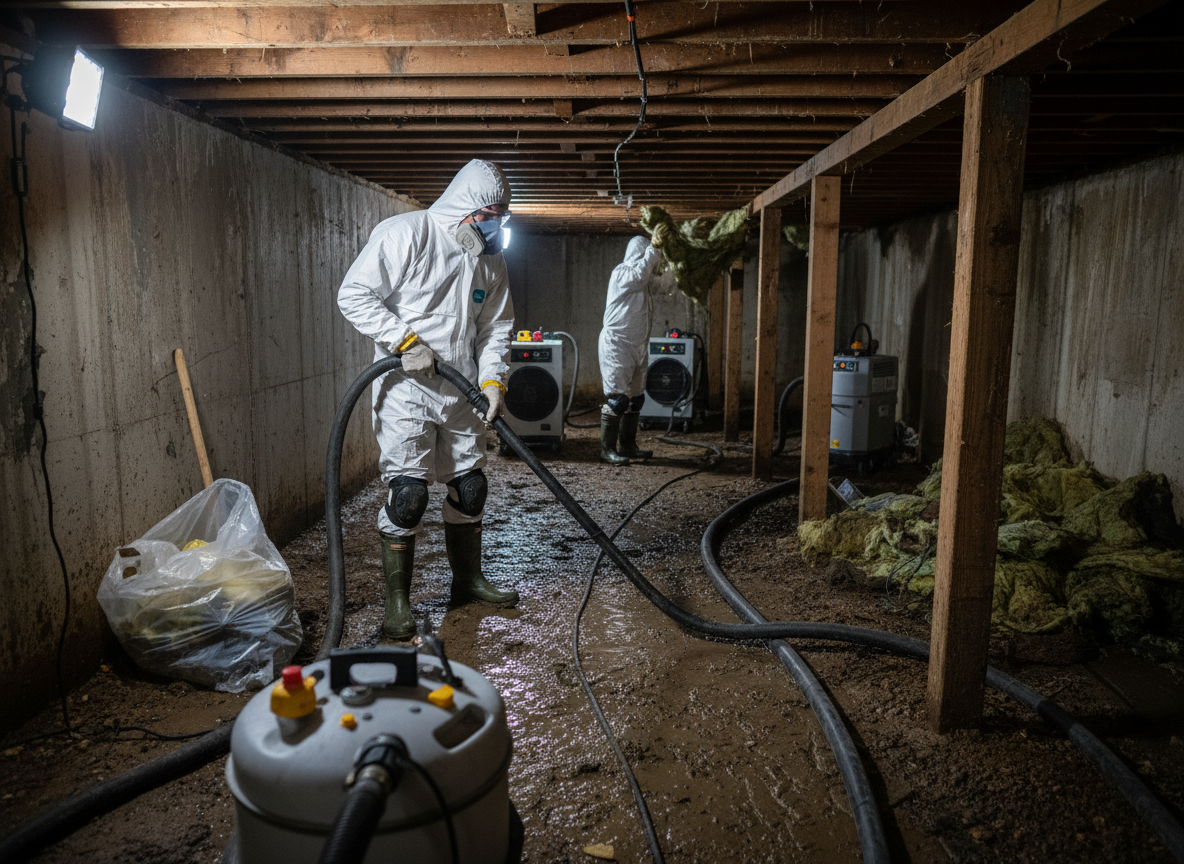
Cleanup begins with water removal using pumps suited to tight access points, followed by targeted drying with air movers and dehumidifiers to prevent secondary damage to insulation and subfloors. Deodorization addresses musty odors trapped in the space, while contents like stored boxes are evaluated for salvage or disposal.
Restoration decisions weigh the cost of drying and repairing joists against full replacement when rot has spread. In many Spokane homes with post-and-beam construction, targeted sistering of beams proves more practical than complete floor replacement.
Common Causes in Spokane Homes
Freeze-thaw cycles crack older foundations, while clogged downspouts and low spots in yards direct meltwater under the house. Leaking supply lines to exterior spigots also contribute during cold snaps.
Assessment and Safety Steps
Initial inspection maps moisture levels with meters and identifies entry points without disturbing settled dust that may contain mold spores. Power to affected circuits is isolated and ventilation is added before crews enter.
Extraction, Drying, and Restoration
Pumps remove pooled water, then industrial drying equipment runs until wood moisture readings return to normal. Damaged insulation is removed and new vapor barriers are placed where needed to limit future humidity.
Technician insight
In Spokane, the thing that catches most people out with Crawl Space Water Damage Cleanup is how clay soils on the South Hill hold meltwater against 1950s-era foundations for weeks after the snow is gone, so the real drying often takes longer than homeowners expect once the visible water is gone.
South Hill Crawl Space After Spring Melt
Water had entered through a cracked foundation corner on a 1960s home and pooled around the main beam. Assessment showed elevated moisture in several joists and saturated insulation. Extraction and three days of drying brought readings down, after which damaged sections were sistered and a new vapor barrier was laid.
Crawl Space Water Damage Cleanup Services We Offer
✓Crawl Space Water Extraction
Removes standing water from tight under-home spaces using portable pumps that fit through small access doors common in Spokane homes.
✓Crawl Space Drying Services
Sets up air movers and dehumidifiers sized for enclosed areas to bring wood and soil moisture back to safe levels after intrusion.
✓Insulation Removal and Replacement
Pulls saturated fiberglass or cellulose from joist bays and installs new material rated for WA climate conditions.
✓Vapor Barrier Installation
Lays sealed 6-mil or thicker liners over soil to block ground moisture from re-entering the crawl space after cleanup.
✓Sump Pump Repair and Upgrade
Fixes or replaces failing units that allow water to accumulate during heavy Spokane rain events or snow melt.
✓Structural Drying for Floor Joists
Targets drying on beams and subflooring to limit rot before deciding on repairs versus replacement.
How it works
- 1
Site Assessment
Measure moisture in wood and soil, locate entry points, and note any electrical or structural concerns before work begins.
- 2
Water Extraction
Use pumps and wet vacs to remove pooled water from the crawl space floor and low spots around piers.
- 3
Drying And Deodorization
Run drying equipment until readings normalize, then apply odor control to address trapped moisture smells.
- 4
Contents And Repair Evaluation
Check stored items for salvage, remove damaged insulation, and advise on joist repairs or vapor barrier upgrades.
Pricing
Cost varies with crawl space size, depth of water, amount of insulation to remove, and whether joist repairs are required after drying.