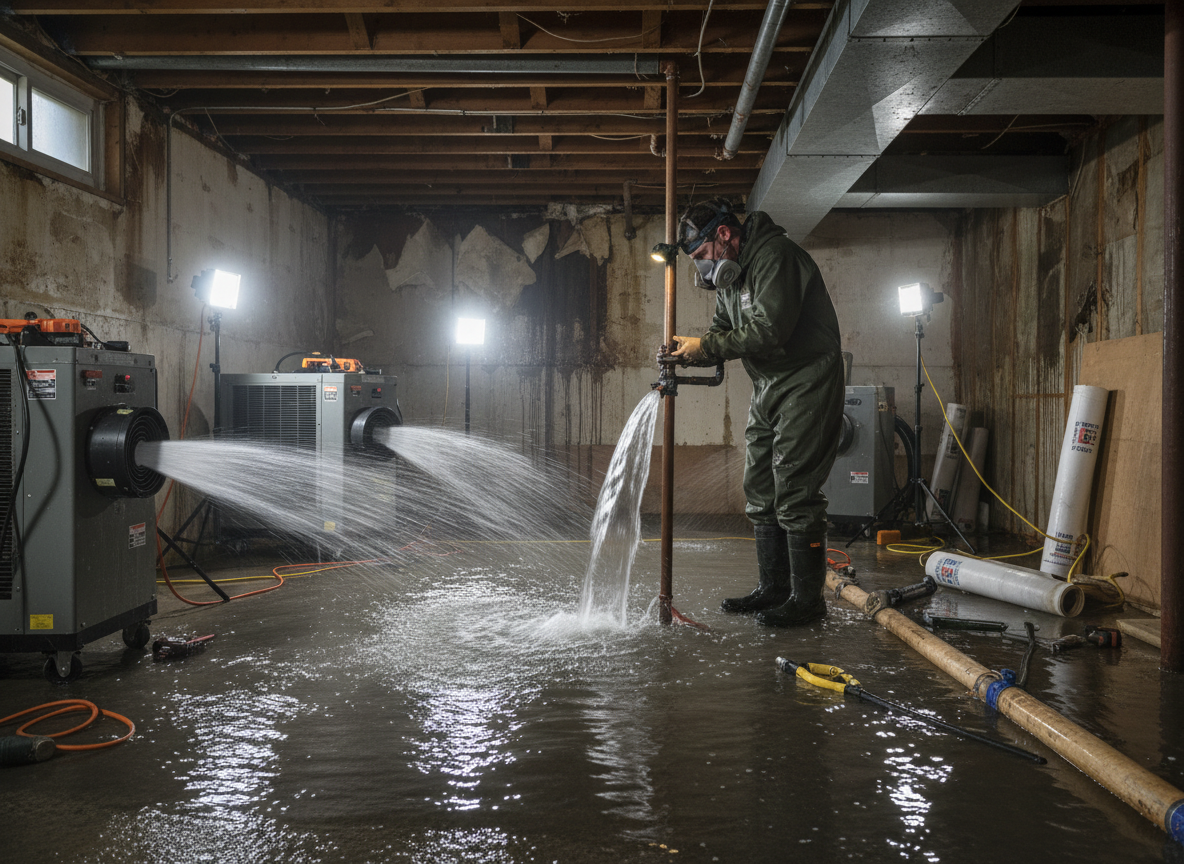
Burst pipes in Spokane often stem from freezing temperatures in winter, aging galvanized lines in pre-1980 homes, and tree root interference with underground supply lines. Safety begins with shutting off the main valve and avoiding electrical outlets near standing water. Assessment involves moisture meters and thermal imaging to locate hidden saturation behind walls and under floors.
Cleanup starts with extraction using submersible pumps and wands to remove bulk water, followed by removal of saturated carpet, drywall, or insulation that cannot be salvaged. Drying relies on industrial air movers and dehumidifiers placed for cross-ventilation, with daily monitoring to prevent secondary mold growth in the region's damp climate.
Contents handling includes packing out affected furniture and belongings for off-site cleaning when on-site methods risk further damage. Restoration decisions weigh the cost of drying and patching against full replacement, especially for older hardwood floors or multi-layer drywall assemblies common in Spokane neighborhoods.
Repair-versus-replace choices focus on pipe material and access; copper or PEX sections can often be spliced while galvanized runs in crawl spaces may require longer reroutes to avoid repeated failures during freeze cycles.
Common Causes in Spokane
Winter freezes expand water in uninsulated exterior walls and crawl spaces, while sediment buildup in older plumbing creates weak points that fail under pressure.
Safety and Assessment Steps
Technicians first isolate the water source and test for electrical hazards before mapping moisture migration with non-invasive tools to guide precise demolition limits.
Technician insight
In Spokane, the thing that catches most people out with Burst Pipe Water Damage is crawl-space pipes in homes built before the 1970s that freeze along the north side of the foundation where wind chill is strongest; homeowners often stop at visible water on the main floor and miss saturation in the joists until the floor starts to cup weeks later.
Browne's Addition Basement Leak
A homeowner called after water appeared along baseboards following a January cold snap. Inspection found a split galvanized supply line running through an uninsulated exterior wall. Extraction and drying focused on the joist bays, followed by selective drywall replacement instead of full wall removal.
Burst Pipe Water Damage Services We Offer
✓Burst Pipe Water Extraction
Removes standing water quickly from affected rooms to limit spread into subfloors and wall cavities.
✓Structural Drying and Dehumidification
Deploys targeted airflow and moisture removal equipment to dry framing and finishes without promoting mold.
✓Contents Cleaning and Pack-Out
Safely removes and restores salvageable belongings when on-site drying would cause additional harm.
✓Floor and Wall Demolition
Cuts away irreparably damaged materials to expose hidden moisture for complete drying.
✓Odor Removal and Deodorization
Neutralizes musty smells left by prolonged water contact using air scrubbing and antimicrobial treatments.
✓Pipe Access and Temporary Repair
Creates minimal openings to reach and stabilize leaking lines until permanent plumbing fixes occur.
How it works
- 1
Initial Assessment
Technicians locate the burst, map moisture extent, and document conditions for insurance records.
- 2
Water Extraction
Pumps and vacuums remove bulk water from floors and cavities to stop further absorption.
- 3
Drying and Monitoring
Equipment runs with daily checks until moisture readings return to normal levels.
- 4
Restoration and Repair
Rebuilds removed sections and addresses any remaining pipe issues to restore the space.
Pricing
Costs vary with the volume of water released, square footage affected, number of affected levels, and whether hidden cavities require additional demolition and drying time.