
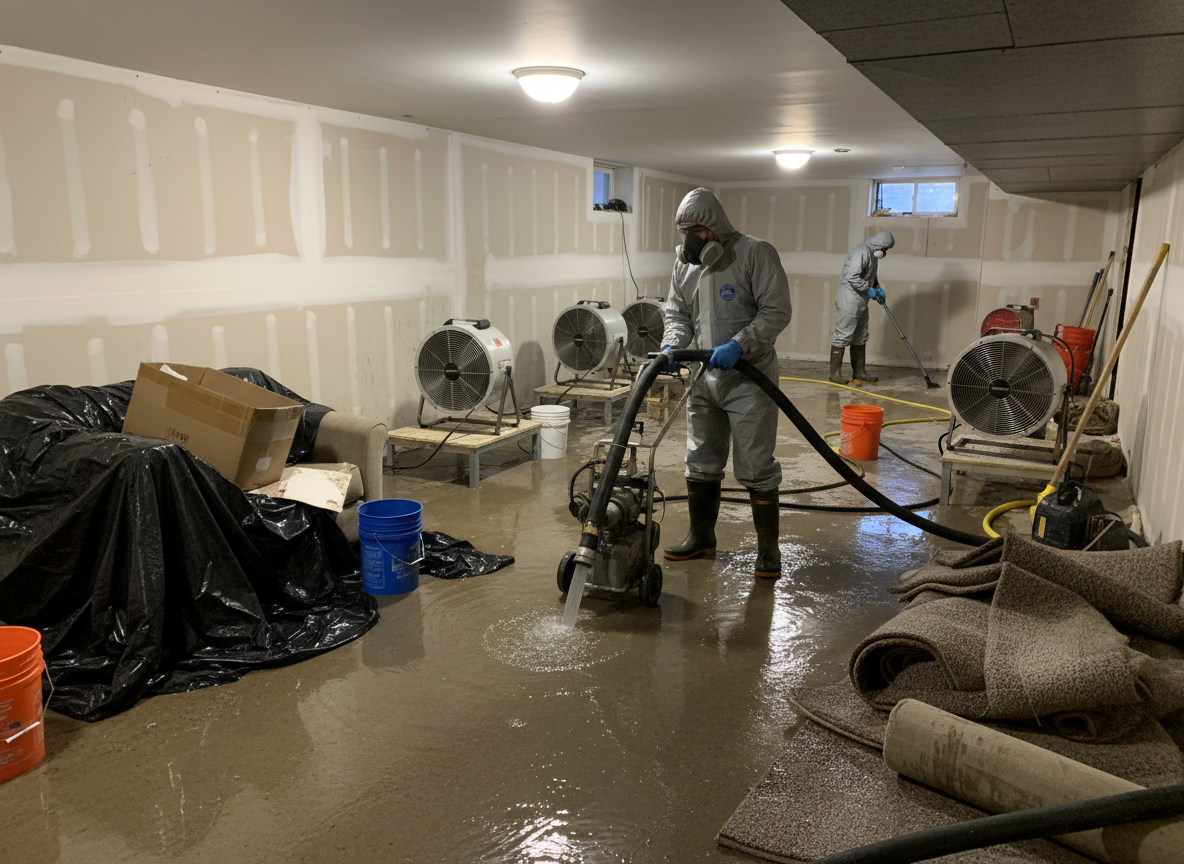
Basement flooding in Spokane often stems from heavy spring snowmelt overwhelming downspouts, older clay sewer lines backing up during rain, or sump pump failure in homes built before 1960. Safety starts with shutting off power to affected circuits and avoiding entry until standing water is cleared, since Spokane's cold groundwater can carry contaminants from street runoff. Assessment uses moisture meters on concrete walls and floors to map hidden saturation behind paneling or under carpet pads before any removal begins.
Cleanup begins with extraction of standing water using truck-mounted pumps suited to Spokane's narrow alley access. Removal of saturated insulation, drywall, and carpet follows, with debris hauled to local transfer stations rather than left on site. Drying relies on air movers and dehumidifiers sized for Spokane's dry summer air or winter humidity spikes, while deodorization targets musty odors trapped in porous concrete. Contents like boxed items or furniture are inventoried, cleaned off-site when possible, and returned only after drying is verified.
Restoration decisions weigh repair versus replace by checking whether subfloor plywood has delaminated or if lath-and-plaster walls can be salvaged. In many Spokane basements, partial wall replacement above the water line preserves original trim while meeting current code for insulation.
Technician insight
In Spokane, the thing that catches most people out with Basement Flood Cleanup is how quickly snowmelt or a single hard rain pushes water through old foundation cracks in pre-1950 homes on the South Hill. Homeowners often start ripping out carpet themselves and miss the water that has wicked up into the horsehair plaster on the opposite wall, turning a two-day job into a full gut. Checking the alley-side grading and downspout extensions first usually shows why the water came in this time.
South Hill Snowmelt Backup
A homeowner called after overnight snowmelt filled the basement to six inches. We found the water had entered through a cracked clay sewer cleanout and wicked into the lower three feet of drywall on two walls. Extraction and removal of wet materials took one day, followed by four days of drying with equipment staged around the furnace. The owners kept their original fir subfloor after it tested dry, avoiding full replacement.
Basement Flood Cleanup Services We Offer
✓Standing Water Extraction
Removes pooled water quickly to prevent further absorption into concrete and framing before mold sets in.
✓Moisture Mapping and Assessment
Uses meters and thermal imaging to locate hidden dampness behind walls and under floors without unnecessary demolition.
✓Saturated Material Removal
Cuts out and disposes of wet drywall, insulation, and carpet so remaining structure can dry evenly.
✓Industrial Drying and Dehumidification
Deploys equipment calibrated for Spokane's seasonal humidity swings to bring moisture levels back to safe readings.
✓Contents Handling and Cleaning
Moves, cleans, and stores salvageable items off-site until the basement is dry and safe for return.
✓Odor Removal Treatment
Applies targeted deodorizers and air scrubbers to eliminate musty smells trapped in porous surfaces.
How it works
- 1
Initial Safety and Water Shutoff
Power to the basement is isolated and standing water is pumped out using equipment sized for tight Spokane access points.
- 2
Assessment and Documentation
Moisture readings and photos document the extent before any demolition begins.
- 3
Extraction and Removal
Water is extracted and saturated materials are removed to open up surfaces for drying.
- 4
Drying, Monitoring, and Final Restoration
Equipment runs until readings stabilize, followed by selective repairs or replacement of finishes.
Pricing
Pricing depends on water depth, square footage affected, whether contents need off-site cleaning, and how many days of drying equipment are required.